Find Me

Find new posts at coryhartman.com!

Monday, January 28, 2013

The Vision Thing (8): Seeing God "with" Someone

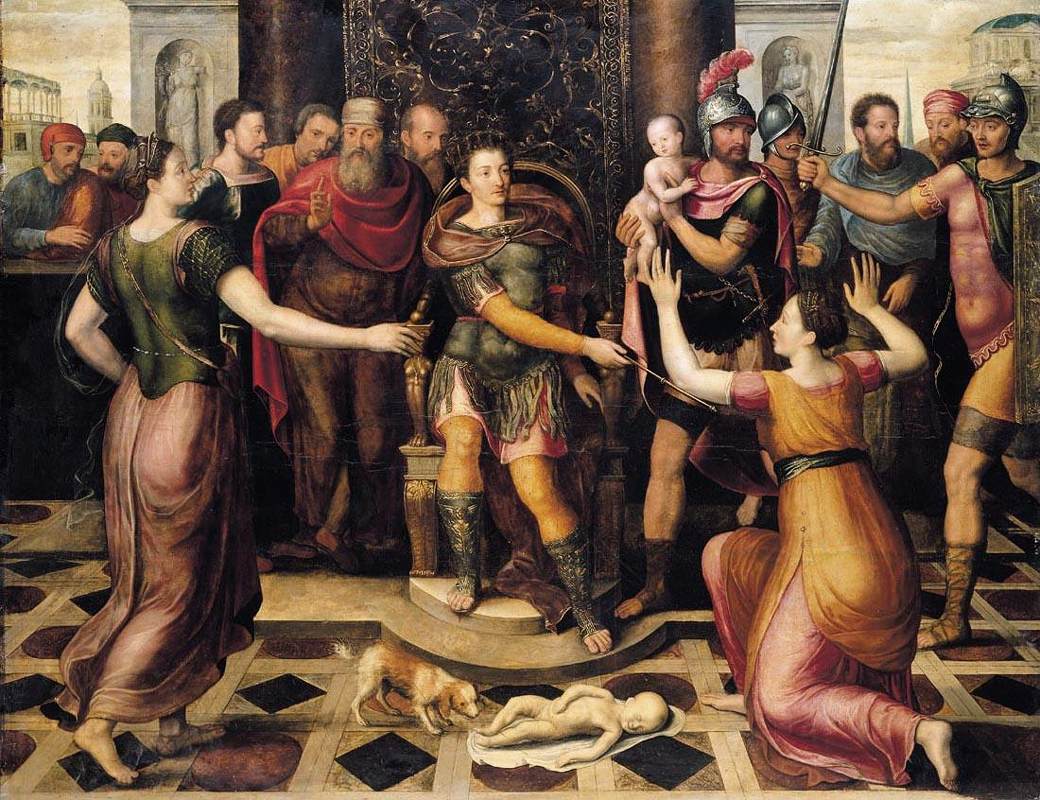
Antoon Claeissens, The Judgement of Solomon

I have maintained that in order to have true vision—which is seeing what God sees—we first need to see God himself. Very often the glimpse that people have of God—thus getting them started on their path to vision—is seeing God "with" someone else.

Let's take Joseph, for example. His master Potiphar's first vision of Yahweh, the true God, was "observ[ing] that the LORD was with [Joseph] and that the LORD made everything he was doing successful" (Gen. 39:3). This man who didn't worship Yahweh was seeing what God was doing for the first time. He saw that God was going to keep blessing Joseph, so it was wise for him to get in line with that.

A few centuries later, Balaam, who had been hired to curse Israel, refused to do it but rather blessed Israel instead because he saw that Yahweh was with Israel. His "eyes were open" to God's favor on that nation; he saw what God saw and got in line with it.

When King Solomon made his famous verdict between the two prostitutes, word got around throughout Israel, and "they held the king in awe, because they saw that he had wisdom from God to administer justice" (1 Kings 3:28, NIV). With God in Solomon's mind, no one could get away with anything, so they got in line with God's intentions.

Not everyone in your world will see the vision that God gives you or your church. In fact, most will not, at least not initially. But if your vision really is from God, then you won't just have God's vision but God himself. The first glimpse people get of the vision is the powerful, prospering presence of God with you.

In order to properly communicate vision, we must communicate God by revealing him through our impossible power and success. When people wonder, "How could someone so ordinary do something so extraordinary?—it must be God," they have started down the path to catch the vision.

Monday, January 21, 2013

The Vision Thing (7): Dreams

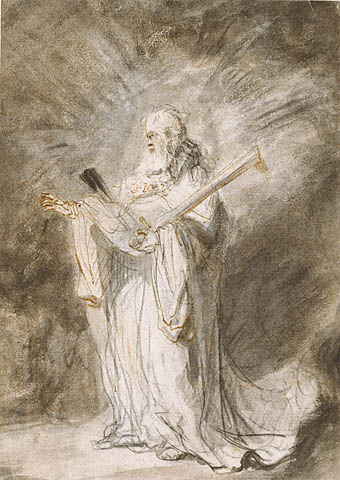
Rembrandt van Rijn, The Dream of St. Joseph (1650-55)

Have you noticed that in the Bible, a lot of the time when people get a vision of what God sees for the world it's in a dream? I'm not talking a metaphorical (though very real), Martin Luther King, Jr.-style dream. I'm talking about a literal, I'm-physically-sleeping-when-I-see-it kind of dream. Abraham had one; so did Jacob (actually twice, not counting his vision of God), not to mention Joseph, Jacob's son, Joseph, Mary's husband, and many others. And this isn't just a before-Jesus thing either, because Paul had at least two.

I don't think I've ever heard anyone teach much about acquiring a vision from God by dreaming, perhaps because it's hard to know how to apply it practically. But if we're going to be biblical in our approach to vision, I guess we had better be open to it. Attend to your dreams, because you never know when the Lord is going to show up.

Wednesday, January 16, 2013

The Vision Thing (6): Right Now

Anyone who has received true vision must remain open to new vision. Vision may be augmented. It may also expire. It's not enough to have seen what God sees in the past if there is something he intends to show you right now.

Past vision was not enough for the Exodus generation of Israel. They had seen all the signs of God's power in Egypt and in the wilderness, but it was not enough for them the first time they reached the promised land. They did not see his glory going ahead of them in power if they would only obey and march into the land to take it.

Past vision was not enough for Nathan the Prophet. As a seer he had probably seen numerous visions of God and his ways. When David shared his plan to build a permanent temple for God, Nathan thought it was a fine idea and blithely told him to go ahead. But God had an entirely different plan—David wouldn't build God a house, but rather the other way around—and God confronted Nathan in the middle of the night to tell him.

Understand: when God gives you a vision, don't quit following it, no matter how long it takes. Sometimes a single vision lasts for years. But always remain attentive to new vision for new circumstances. And never rely on past faith or past experiences to serve you in the present. Always seek God for his vision for right now.

Monday, January 7, 2013

The Vision Thing (5): For God's Glory

Ferdinand Bol, The Messenger of God Appearing to Joshua (1640-44)

When you actually get vision, it's pretty awesome. Paul the Apostle experienced an extreme example of this. He once got a vision from God so awesome that God allowed "a messenger of Satan" to afflict him ever after so that he wouldn't get full of himself. Vision can be that exhilarating. That might partly explain why it's so rare.

For this reason, it is crucial that everyone who seeks vision from God is focused like a laser on the glory of God. Vision is empowering, but ironically it can also distract from the Vision Giver. Those who are fired with zeal over the wonder of God's vision but get distracted from the Visionary God do more damage than a person with no vision at all. These people have much more energy than the average person, which makes their inadvertant misdirection that much more destructive. (Does this explain certain heresies and cults?) That's why God always starts the vision with a vision of himself.

Also for this reason, the vision doesn't just come from God but goes to God. He is both the beginning and end of true vision.

Joshua learned this lesson. Like other true visionaries of the first few books of the Bible, when Joshua met God as "the commander of Yahweh's army," he saw God (Josh. 5:14-15), then he saw what God was going to do (6:2), then he saw what he was supposed to do (6:3-5). The thing that God did—toppling the wall of Jericho in one instant with no siege equipment—was so far out there, so astonishingly impossible, that no one but God could get the credit. God gave Joshua that vision for God's own glory.

The next episode proves the point. Joshua led Israel to attack the small city of Ai, believing that it would fall without special assistance. To the contrary, without God helping the Israelites, the defenders of Ai routed them. Why? Because Israel did not adequately give the glory of the previous vision to God. One way this happened was through Joshua's failure to inquire of God how Ai was to be captured. But the bigger issue was that a guy named Achan took plunder from Jericho rather than leaving it for the Lord. The whole city, its inhabitants, and all it contained was to be devoted to God like a whole-burnt offering of the firstfruits of the conquest of Canaan—putting all the valuables in Yahweh's treasury, slaughtering everything that breathed, and torching the remainder. Achan's sin was attributed by God to all Israel as a failure to give him the glory he deserved. The glory he deserved, you see, was all of it. The barely noticeable fraction that Achan took for himself entirely compromised the whole. God's vision is for God's glory.

True, "the glory of God" is not specific enough to constitute vision in the concrete—that vision is about how God gets glory for himself, the specific way he intends masterfully to use frail and clumsy people as his instruments. Also truly, every person, church, or whatever should have as its ultimate objective the glory of God. So the glory of God is a given. But taking it as a given does not mean taking it for granted.

There is a grave temptation to fail at just this point. In fact, only those who have experienced the euphoria of truly grasping a vision and implementing it are allowed to reach the place where this temptation arises. It is they who have the greatest power to harm by failing at it. And so it is crucial on the front end, even before the vision is revealed perhaps, to be firmly convinced that God's vision is always, ever, only for God's glory.

When the only glory the visionary craves is to bask in the glory of the Vision Giver, then he or she is on the right track.

Tuesday, January 1, 2013

The Vision Thing (4): Misapplying the Vision

William Blake, Job Confessing His Presumption to God Who Answers from the Whirlwind (1803-05)

I have proposed that when people seek vision most of them are seeking what they ought to do. Some thoughtfully seek a vision of what is as God sees it. But I have argued that before seeing either of these, a person needs a vision of God himself. This is not only because God generally does not give a vision of what is or what we ought to do before displaying himself. It is also because people who see the world as God sees it without seeing God are liable to misapply the vision they have seen.

The Book of Job is a prime example of this. One of Job's erstwhile friends, Eliphaz, describes a vision he had in which it was revealed to him that not a single human being is righteous before God as evidenced by the sudden deaths that afflict humankind. But Eliphaz could not apply this true principle properly to Job. In fact, God angrily rebukes Eliphaz "because you have not spoken about me what is right, as my servant Job has" (42:7).

But Job himself had received his own rebuke from God. Job had seen that God destroys and renders impotent the mighty and important and uncovers their supposed wisdom for the foolishness it is. But that true vision of Job did not prevent God from reproving him as one "who darkens counsel with words without knowledge" (38:2).

What Job, Eliphaz, and the rest were missing was not a grasp of true principles but a vision of the God of truth himself. Once Job saw God in his dreadful majesty, he despised himself and repented in dust and ashes (42:6). Then he really saw, and then he was saved.

Knowing what the world is and how it works form an important element of vision. But these, even if correct, will lead us foolish humans astray if we lack a vision of the God from whence they come. We are bound to misapply the principles if our eyes wander from the God who speaks them.

There are so many people and churches with no vision at all. But of those who have grasped God's vision, how many succumb to the temptation to apply it with such singleminded enthusiasm that God himself moves offstage? What havoc visionaries without a vision of God can wreak.

Thursday, December 27, 2012

The Vision Thing (3): The Import of the Visible

When people long for vision as I've defined it in these posts, it is not because they are physically blind. This is obvious, but it bears repeating. People are generally capable of seeing what is around them, but they often cannot grasp the meaning, value, and significance of what they are seeing. In large part, that is what vision is.

Some think and teach that any person can attain vision if they simply look more closely, more intently, more methodically, more deliberately at the world around them, if they don't just see but look at the world that passes before their eyes continually. There is a good deal of truth to this. I remember in a seminary class being assigned to list 75 factual (and thus easily demonstrable) observations about one verse in the Bible. It sounds impossible (and actually, I think it was), but it was amazing how much detail one can see if one takes the time to look at it. And from detail may spring insight.

But insight is not guaranteed. When it comes to seeing God's vision, close observation of the world he made and silently orders and directs may be a strong preparation for vision, and if God blesses someone with vision it may come through their close observation of the world—but only if God blesses them, only if he intervenes supernaturally. A person may spend a lifetime observing nature far more carefully than the average person does and yet never see God's nature reflected in it. A person may spend a lifetime scrutinizing the Bible far more than the average person does and yet never see the glory of God reflected in the face of the Christ revealed on every page. A church may spend thousands of dollars and man-hours gathering data about their community or target demographic and yet never see the ripened grain and the lost sheep and why it matters so much to God to bring them in or what bringing them in actually means.

Vision is truly seeing what is in front of your physical eyes, but true vision doesn't come merely by looking harder. It comes from a spiritual revelation that by default every person lacks, that only God bestows, that opens the eyes to see.

Monday, December 24, 2012

The Vision Thing (2): Seeing God through Jesus

No one can have God's vision without first gaining a vision of God. But there's a problem: no one can have a vision of God, not a full and unobscured one anyway. God "lives in unapproachable light, whom no human has ever seen or is able to see" (1 Tim. 6:16). "No one has ever seen God," says John. But the good news is that "[t]he only one, himself God, who is in closest fellowship with the Father, has made God known" (John 1:18). "We saw his glory—the glory of the one and only, full of grace and truth, who came from the Father" (v. 14, emphasis mine). Whose glory? Jesus', the Word become flesh.

As "the radiance of [God's] glory and the representation of his essence" (Heb. 1:3), the Son's glory is the glory of the Father. In fact, it might be appropriate to say that the Son himself is the glory of the Father. But because of the incomprehensible fact of the Son's incarnation, we are able to see the Son even though the Father is hidden from us in light. Because the Son is exactly like the Father and represents him perfectly—all that is true of one is true of the other except that the Son is fathered by the Father—when we see Jesus the Son, we see God the Father. "[T]he one who sees me sees the one who sent me," Jesus said (John 12:45). "The person who has seen me has seen the Father" (14:9).

But a great difficulty appears. It seems impossible that we who cannot see Jesus with our eyes the way Jesus' twelve disciples did are able to see the Father. But after Jesus ascended to heaven God made a way that all people could see his Son. "God, who said 'Let light shine out of darkness,' is the one who shined in our hearts to give us the light of the glorious knowledge of God in the face of Christ" (2 Cor. 4:6). God implants the face of Christ, the radiance of God's glory, inside people's psyches so that even though they don't see him with their eyes, they see him just the same.

Furthermore, everyone who sees the Son not only sees the Father but also sees the Holy Spirit, and vice versa. "[T]he world . . . does not see him or know him," Jesus told the Twelve, but they saw and knew him, because he was with them in Jesus "and will be in you" (John 14:17). So the person with the Spirit within "sees" the Spirit, by seeing him sees the Son, and by seeing the Son sees the Father who cannot be seen.

Therefore, anyone who wants true vision, who wants to see things the way God sees them, has to begin by fixing their eyes on Jesus, because this is the only way to see the God who is the beginning and the end of all true vision. And steadily viewing Jesus is not possible without the knowledge that comes by the Holy Spirit.

So how does one get the Holy Spirit? That's easy—you just have to ask the Father! But I believe it's important (more for yourself than for him) to specify just what you're asking for. You are not asking for the Holy Spirit so that you can have a vision of what to do. You must ask for the Holy Spirit to give you a vision of the Son of God, the Word, so that in him you would see the Father. When the sole vision you crave is a vision of the Father, he will give it—and with it much more vision besides.

Thursday, December 20, 2012

The Vision Thing (1): Seeing God

Eugene Pluchart, God Appears to Moses as a Spirit in the Burning Bush (1848)

When churches (or other organizations or individuals) first grasp their need for vision, when you first hear people in them say something like, “We need vision,” it’s usually closely followed by something like, “ . . . because need to know what to do.” This is both right and wrong.

It is right because, for one, vision (as defined previously) usually (though not always) requires people to do something. It is also right because usually the people who say, “We need to know what to do,” truly don’t know what to do and really ought to be doing something different from what they’re doing.

But it is also wrong. If your attention to vision is entirely focused on what you are supposed to do, you will never find it and you are likely to make great mistakes.

Remember that vision, true vision, is what God sees. And what God sees first of all is himself.

In fact, there is a recurring pattern in Scripture, especially in the first ten books of the Bible, that we can expect of a true vision from God. Let’s look at Moses as an example.

In Exodus 3, as Moses, Pharaoh’s-adopted-son-turned-fugitive-shepherd is tending to the flock in the wilderness, he sees a bush on fire that doesn’t burn up. When he comes closer, God reveals that it is he, intoning, “I am the God of your father, the God of Abraham, the God of Isaac, and the God of Jacob” (v. 6) So the first thing that Moses has a vision of is God himself.

Then God continues,
I have surely seen the affliction of my people who are in Egypt. I have heard their cry because of their taskmasters, for I know their sorrows. I have come down to deliver them from the hand of the Egyptians and to bring them up from that land to a land that is both good and spacious, to a land flowing with milk and honey, to the region of the Canaanites, Hittites, Amorites, Perizzites, Hivites, and Jebusites [vv. 7-8].
Note that what God is telling Moses here is what God has been up to and what he plans to do next. So the second thing that Moses has a vision of is what God is doing.

It is only then that God says to Moses, “So now go, and I will send you to Pharaoh to bring my people, the Israelites, out of Egypt” (v. 10). Now at last, finally, the third thing that Moses has a vision of is what he is supposed to do.

To repeat, the pattern of vision is
  • God himself
  • what God is doing
  • what we are supposed to do
But this is easy for us to miss. It was even easy for Moses to miss. Because once God finished his statement, Moses’ first words were, “Who am I, that I should go to Pharaoh, or that I should bring the Israelites out of Egypt?” (v. 11).

Now see that Moses was both right and wrong. He did correctly hear his assignment—that was truly part of the vision—but he starts at the end: what he is supposed to do. That was the focus, as it ever is with us most of the time.

God addresses Moses’ concern by assuring Moses that he would be with him (v. 12), which also reminded him that God is really the one bringing the Israelites out of Egypt. Then God repeats the pattern of vision over again to see that Moses gets it.
  • In vv. 14-15 God reveals again who he is, God himself (“I Am Who I Am”).
  • In vv. 16-17, he tells Moses to bring together Israel’s elders and tell them what God is doing (“I have attended carefully to you . . . I will bring you up”).
  • Then in v. 18 God tells Moses what he is supposed to do with the elders (“go to the king of Egypt and tell him . . . ”).
Then, as a final encouragement to Moses, God returns to what he is going to do in vv. 20-22 (“I will extend my hand and strike Egypt . . . I will grant this people favor with the Egyptians”). Poor Moses is still wrapped up in what he is supposed to do, so 4:1-17 entirely revolves around Moses’ protests about what he is supposed to do and God’s replies to him about how he is supposed to do it.

You can see the same pattern of a true vision in a number of places. You see it with Abraham, Jacob, Joshua, Manoah, and Samuel. And you see it with Jesus. Jesus, himself God, the only one who had seen God the Father completely (John 1:18), said,
I tell you the solemn truth, the Son can do nothing on his own initiative, but only what he sees the Father doing. For whatever the Father does, the Son does likewise. For the Father loves the Son and shows him everything he does, and will show him greater deeds than these, so that you will be amazed. For just as the Father raises the dead and gives them life, so also the Son gives life to whomever he wishes [John 5:19-21].
So even the vision that Jesus, the Son of God, had was first of God himself, then of what God is doing, then of what he is supposed to do.

The bent of humanity—the bent of sin—is to focus so intently on ourselves that even when we want to do good for God or others (or are called to it like it or not), we still focus on ourselves. But if you truly seek vision, the first thing is to surrender your attention to what you are supposed to do. Don’t even seek what God is doing. The first and most important thing to see is God himself. That’s where true vision begins.
Tuesday, December 18, 2012

The Vision Thing (intro)

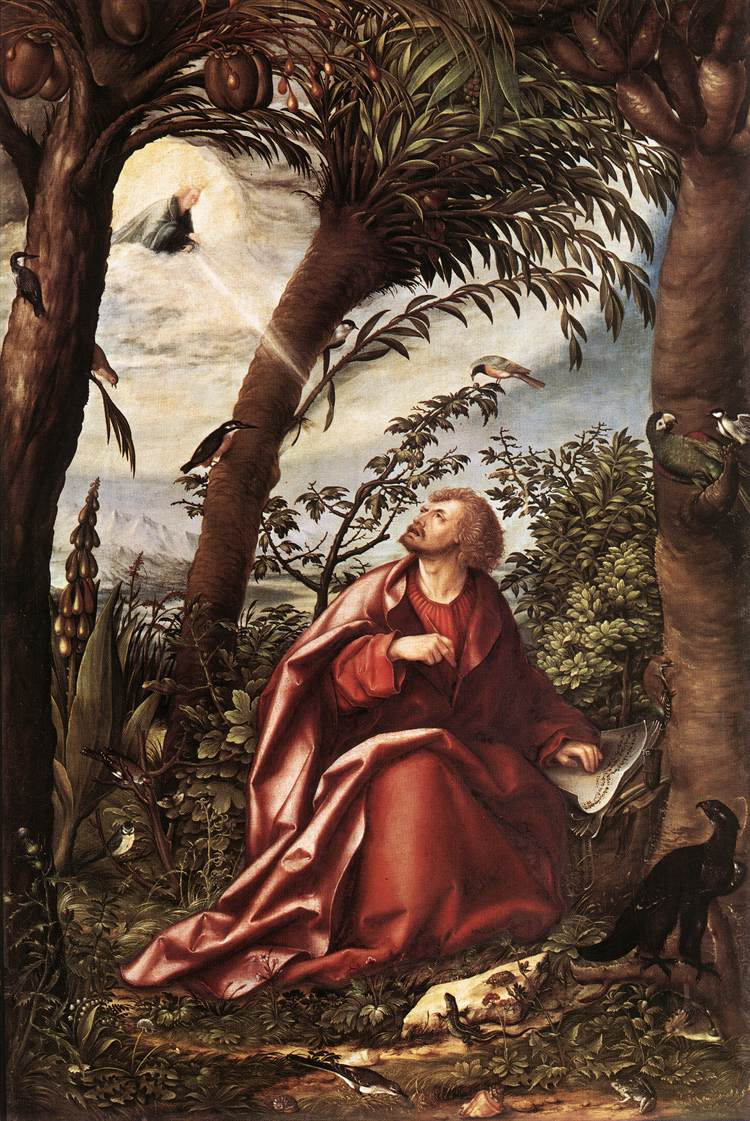
Hans Burgkmair, St. John Altarpiece: St. John the Evangelist in Patmos (1518)

Vision is cool. We want it from our leaders. Companies want it for themselves. Churches want it too. And when I say that vision is cool, I don’t just mean that vision is hip and trendy. I mean that vision really is cool when you have it or when you’re around people who have it or are in an organization that has it. As Will Mancini puts it, “[Vision] clarity isn’t everything, but it changes everything.”

A chosen group in my church is seeking greater vision clarity, and we are in a methodical process to discover it. Very helpfully, we began that process by going to the Bible to see what it says about vision. As it happens, it says quite a lot.

Stemming from my investigation of what the Bible says, I’m going to post 29 short, biblical meditations on vision. I’m defining vision as “human beings’ spiritual ‘sight’ to see things the way God does.” Before you pursue your vision, check out what God says about the vision thing.

Friday, December 14, 2012

Justification

Justification is not the entirety of salvation, but it is an essential component of it.

What is justification? The declaration that a person is innocent in the sight of God.

Who/what justifies? God the Father.

Why does he justify? His grace. (Note: “Grace” in the Bible may mean either the giver’s generous disposition or the gift itself. The former is meant here.)

How can he justify? The death, resurrection, and ascension of his Son, Jesus Christ, on people’s behalf and in their place.

Whom does he justify? People who place their sole hope for justification in Jesus (also known as “faith”) and profess it.

What is the evidence of justification? The believer’s obedience to the will of God.

Who/what produces that evidence? The Holy Spirit of God living in the believer.

This is the classic Protestant teaching on justification. The Protestant view and mine is that addition, subtraction, or modification of the substance (not mere wording) of these answers is not only an error but probably a fatal one.